
1 June 2026
This year, ZSL marks 200 years of wildlife.
Founded in 1826 - the very same year the world's first photograph was likely taken - our science-led conservation charity has spent two centuries changing the face of animal care, science and conservation.
While our experts were making breakthroughs from the heart of Regent's Park, pioneers in imagery were busy too. Silent films arrived in the 1890s, talkies followed in 1927 (the same year our iconic Reptile House opened), and television brought moving pictures into people's homes for the first time in 1936.
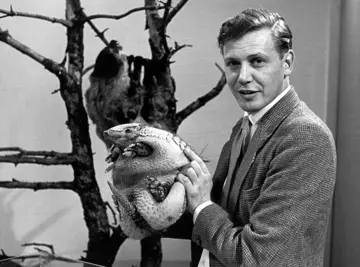
Sir David Attenborough, above, with an armadillo on BBC’s Attenborough and Animals, 1963. Four years on, the world would change forever - as colour television was introduced.
Colour TV transformed the medium again in 1967 - and who better to shape it’s future than Sir David Attenborough, whose career in front of the camera had started right here at London Zoo in 1954. The ripple effects of colour TV reached everywhere - even Wimbledon, which switched to bright yellow-green balls (a colour then-BBC2-Controller Sir David Attenborough chose after others like blue and white, weren’t quite right) so viewers at home wouldn't lose them on screen.
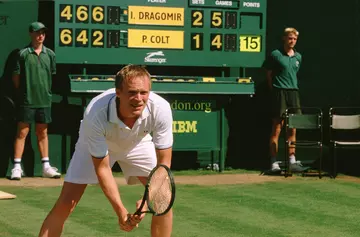
Many years on, a 2004 film about the famous tennis tournament starring Paul Bettany would feature a scene shot at London Zoo.
And technology didn't stop there. CGI rewrote the rules of visual storytelling in the 1990s, flatscreens replaced the family set, and today we absorb images for hours each day from the palms of our hands. But every great visual story is still grounded in reality - and for us, that reality has always been wildlife.
We inspire, inform, and empower people to protect and restore wildlife. We've been doing that from the page, the screen and the stage for longer than you might think.
Harry Potter And The Philosopher’s Stone (2001)
Also known as Harry Potter and the Sorcerer’s Stone to our friends across the pond, the first film in the wizarding series broke records at the box office worldwide. One iconic scene saw a very young Daniel Radcliffe face-to-face with one of the snakes in our historic Reptile House, designed by our very own herpetology hero, Joan Procter, 85 years earlier. The enclosure the young wizard chats parseltongue to, was actually that of a Black Mamba at the time – not the Burmese Python with Slytherin leanings we were led to believe - but we’ll let them off.
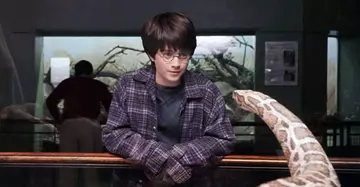
This modern marvel changed the face of film forever, and as digital was starting to take hold, the cinematographer on this groundbreaking production described the film as the last major production to be shot entirely on film negatives. Sure, there was a little magic with effects – but no other movie was ever made the same way again.
Today, you’ll find ZooTown, a magical place for children to enjoy, in our former Reptile House. Just around the corner though, your opportunity to pose with said Burmese Python for your very own Potter portrait.
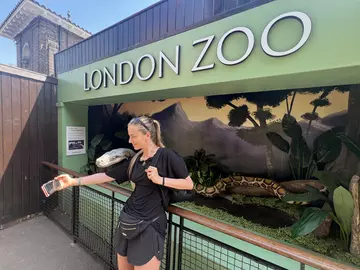
About a Boy (2002)
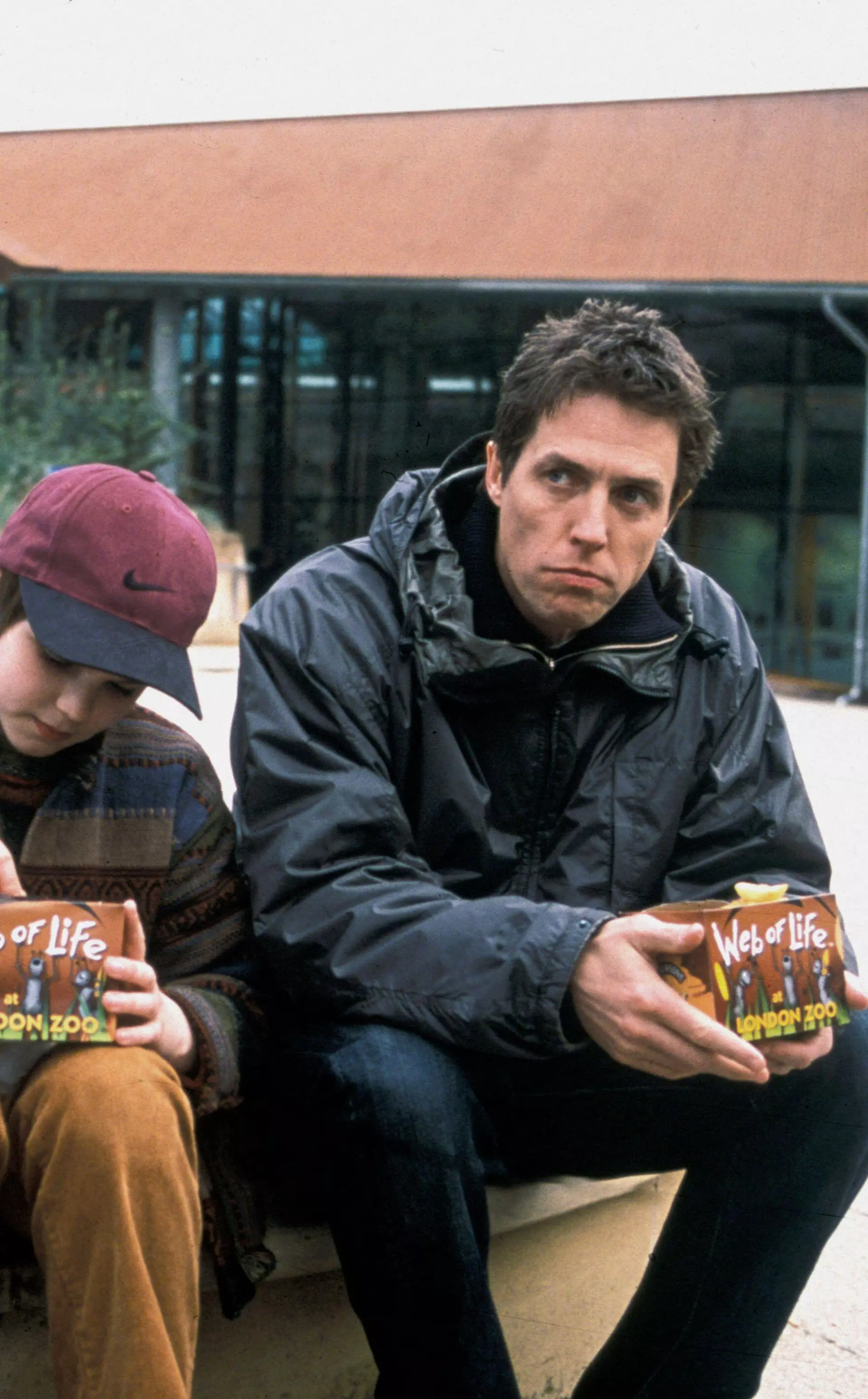
Two years after Harry Potter put our Reptile House on the global entertainment stage, Hugh Grant brought a very different kind of magic to our Lubetkin Penguin Pool.
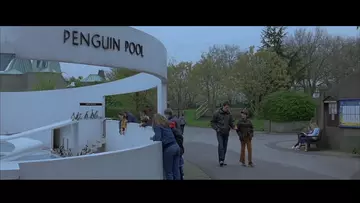
In About a Boy - adapted from Nick Hornby's novel and starring Grant alongside a then 11-year-old Nicholas Hoult - the iconic spiral ramps provide the backdrop for one of the film's key scenes, as the commitment-phobic Will [Grant] attempts to convince young Marcus [Hoult] that no man is, in fact, an island.


You'll also spot the unlikely duo snacking at our iconic dung beetle sculpture - a bronze commissioned in 1999 from sculptor Wendy Taylor. It's still here, and will soon be joined by an exciting new floor mosaic marking ZSL’s 200th anniversary by iconic punk artist Linder Sterling.
As It Was (2022)
When the biggest song of 2022 needed a backdrop worthy of its moment, Harry Styles came to us. The video for As It Was - which went on to become the most streamed song of the year globally - was filmed across a set of iconic London locations, and our Grade I listed Lubetkin Penguin Pool was one of them.


Built in 1934 and designed by the visionary Berthold Lubetkin, the Pool's gravity-defying interlaced spiral ramps were revolutionary at the time - and clearly still are. It's the kind of structure that stops people in their tracks, which perhaps explains why Harry chose it to stop and, at the 1:09 mark, whip his coat off revealing an iconic sequinned red trouser suit – a looks still inspiring fashion victims today.
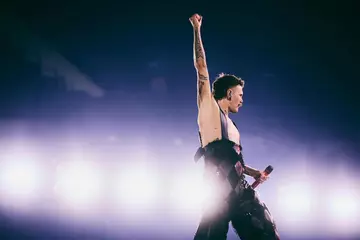
Norway’s Eurovision entry, Jonas Lovv, performing in Austria during our 200th anniversary year, was kidding absolutely no-one of who inspired his costume.
The penguins moved out in 2004 - concrete floors turned out not to be great for their feet - but the Pool remains one of the most photographed spots in London Zoo.
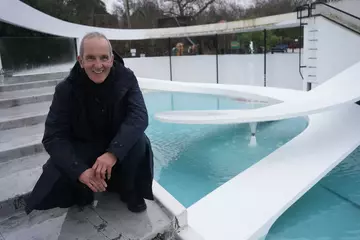
You can also catch the Lubetkin penguin Pool on More4’s Listed Britain – airing on 3 June 2026 at 9pm.
Find the episode here from 3 June
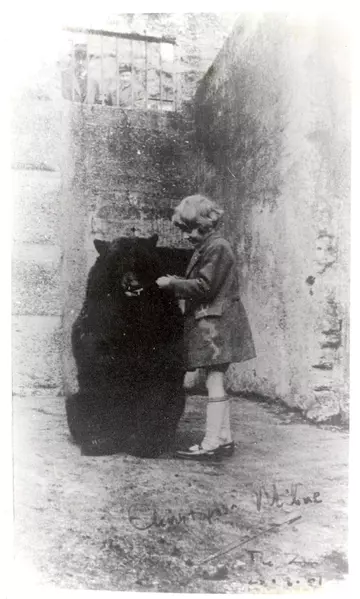
Goodbye Christopher Robin (2017)
Back in 1926, a young boy named Christopher Robin was making regular trips to our conservation Zoo to visit his favourite resident - a female Canadian black bear named Winnipeg. His father, A.A. Milne, was transported by this bond to create Winnie the Pooh we all know and love today. And the rest, as they say, is literary history.
Christopher Robin seen here feeding honey to Winnipeg at London Zoo, 1914
Nearly a century after Pooh started appearing in books, Fox Searchlight brought that heartwarming story of a boy and his bear, back to life - and back to us. Starring Domhnall Gleeson and Margot Robbie, this film was shot across some of our most historic spaces: the Mappin Terraces, built in 1913 and still standing today as our Outback exhibit; Three Island Pond, our oldest exhibit dating all the way back to 1832; and our Giraffe House, built in 1836.


Wonka (2023)
When Willy Wonka needed giraffe milk (yes, you read that correctly), the filmmakers needed a giraffe. Not just any giraffe – our late giraffe Molly, to be precise. So Visual Effects Studio Framestore came to us. Their team spent many hours at London Zoo filming and photographing our resident ungulate in extraordinary detail - every step, every reach, every flick of that remarkable tongue - before heading back to build a vibrant digital version for the big screen.


Every fleeting footstep, every gentle nuzzle with Wonka - all rooted in a very real morning in Regent's Park, in our Giraffe House that's been home to these magnificent animals since 1836.
Withnail & I (1987)
One of the most celebrated final scenes in indie British cinema history – we’re so proud to have played a part in it. Bottle of wine in hand, a sodden and broken Withnail closes the hilarious British comedy with a stagger over to our wolf enclosure in the pouring rain. In true thespian style, he delivers Shakespeare's "What a piece of work is a man!" from Hamlet - to an audience of wolves who, frankly, couldn't care less.
It's devastating, it's darkly funny, and it was filmed right at our gates.


Fun fact – it’s rumoured that Grant had never been drunk before making this film. If you’ve not seen it, you’ll join us in being quite surprised by that one.
A gem in the crown of Handmade Films, a production company fronted by none other than Beatle George Harrison – who years earlier in 1963, along with his fellow mop-top-coiffed bandmates, we'd turned away.
The Beatles had wanted to shoot their very first album cover at our Insect House. We said no. And no - we don’t really know what the Zoo bosses of the time were thinking either.
An American Werewolf in London (1981)
We've hosted some memorable guests over the years. David Naughton is perhaps our most memorable - and our most scantily clad.
In John Landis's horror comedy classic, American tourist David Kessler wakes up after a night of werewolf-fuelled mayhem to find himself naked on the floor of our wolf enclosure with zero memory of how he got there.
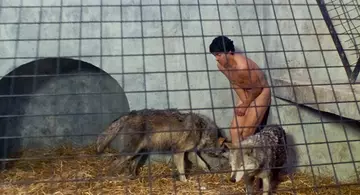
A rather nude David is tasked with getting home with nothing but goodwill and two pounds.
They were supposed to wrap by 9am. They overran. At some point Naughton looked up and noticed a crowd gathering. "Wow," he said, "why have you got all those extras over there?" The reply: "They're not extras. The zoo's open."
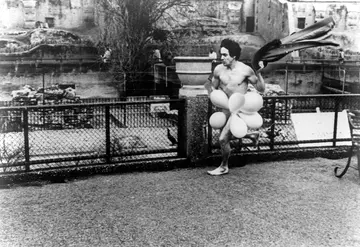
The brave actor features in what can only be described as a must-see creature classic.
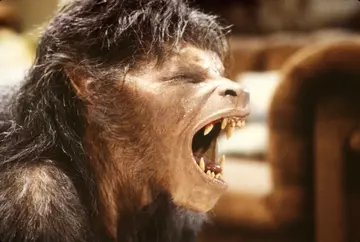
The film won the very first Academy Award for Best Makeup, for Rick Baker's extraordinary practical transformation sequence – it really is analogue artistry at it’s very best in film, and a must-watch on that front alone. It remains one of the most influential horror effects sequences ever put on film, brought to life by the same man who created the ghoulish feature make-up in Michael Jackson’s Thriller video.
In a later scene, unknowing lycanthrope David is spotted in Trafalgar Square right in front of one of the lions that Sir Edwin Landseer modelled on one of our lions, back in 1867.
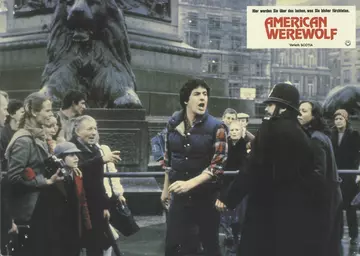
Oh, and if you're wondering about the balloons - you'll have to watch it.
Come Undone – Duran Duran (1993)
Before Simon Le Bon and the band needed somewhere deep and atmospheric in which to film their 1993 comeback single, we'd already been in the aquarium business for 140 years. In fact, we even invented the word – 140 years earlier, in 1853, we opened the world's first ever public aquarium – merging "aqua" and "vivarium." So when Duran Duran came chomping on the idea of fish tanks as a backdrop, they came to the right place.
Directed by Julien Temple, the Come Undone video weaves shots of the band among our vast tanks. Formerly home to famous residents including the heaviest recorded Carp, Clarissa (formerly known as Ravioli – we never quite got to the bottom of why she was re-named), our Aquarium closed for good back in 2019, succeeded by a freshwater aquarium over at our sister site Whipsnade – today housing some of the few remaining individuals of the most threatened species in the world.
Although our original Aquarium’s doors are closed, it’s hard to miss – it had a new lease of life - covered in 2022 with vibrant animal murals by artist, Jane Mutiny.


And in 2024, another artist made their mark on our walls - this time slightly more unannounced. Banksy's gorilla-lifting-a-shutter mural appeared at our entrance, spilling painted birds and a seal into the London air.
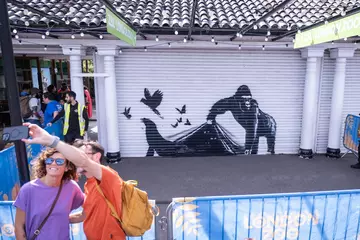
The shutters were taken down shortly after the artwork appeared, to protect it from damage. We remain surprised and delighted to have been honoured with this piece of art.
Skyfall (2012)
James Bond has faced a lot of villains over the years. A Komodo dragon is a new one. In the casino pit scene in Skyfall - still one of the most talked-about sequences in the Daniel Craig era - 007 battles a thug before leaping to safety on the back of one of the world's most formidable reptiles. The dragon in question was a recreation our very own Raja.
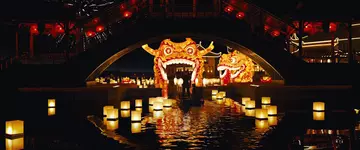
Bond is seen in Skyfall sailing into the jaws of a dragon in Macau – the casino within sees a tense and explosive action scene which ends with him hopping on a Komodo to jump to safety. Long story – best watch it.
Not in person, mind. VFX company Cinesite came to London Zoo in December 2011 and set up a makeshift studio in a room adjoining Raja's enclosure - white walls, white silk ceiling, three cameras - and captured every movement, every texture, every flicker of his tongue. Raja was, by all accounts, a consummate professional. He had just eaten 15 kilograms of meat, which probably put him in a good mood.


Our Komodo dragons have had some famous friends – in 2016, our Attenborough Komodo Dragon house was unveiled, and now-centerian Sir David himself, popped by to meet Ganas, our then resident reptile.
The footage became the first ever CGI creature in a Bond film. Fifty years of sharks, piranhas, crocodiles and alligators - all real. Raja broke that run. An unusual honour, perhaps, but an honour nonetheless.
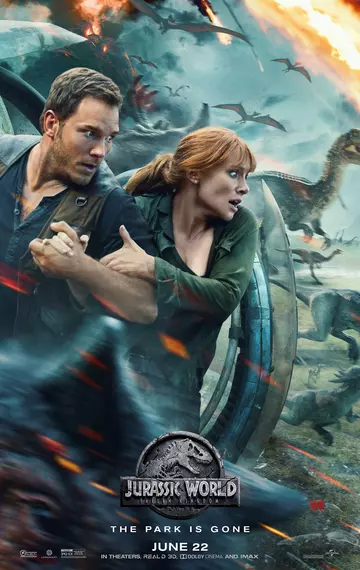
Jurassic World: Fallen Kingdom (2018)
When a T-Rex needed a worthy opponent for one of the most talked-about scenes in the Jurassic franchise, the filmmakers came to us. The end-credits sequence - in which a freed Tyrannosaurus rex crashes through a zoo enclosure and comes face to face with a lion - was partly shot right here, with the second unit filming background plates at our Land of the Lions enclosure.
Land of the Lions had only opened two years earlier in 2016, transporting visitors to the landscape of India's Sasan Gir - the last place on Earth where Asiatic lions roam wild today. It turns out it also makes a convincing backdrop for a prehistoric predator on the loose.
The lion itself ended up fully CGI - the production team originally filmed a real lion at Pinewood, but director J.A. Bayona decided to build the creature from scratch digitally instead. The result was one of the most memorable closing images of the entire franchise. It’s a bit blink-and-you’ll miss it, but you know what to look for now.
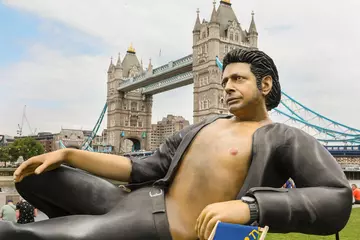
In the very same year that Fallen Kingdom hit cinemas, a whopping great statue of a half-naked Jeff Goldblum appeared aside the Thames just a few miles from our conservation Zoo. On the banks of the very river in which we’ve been doing conservation work for over 20 years.
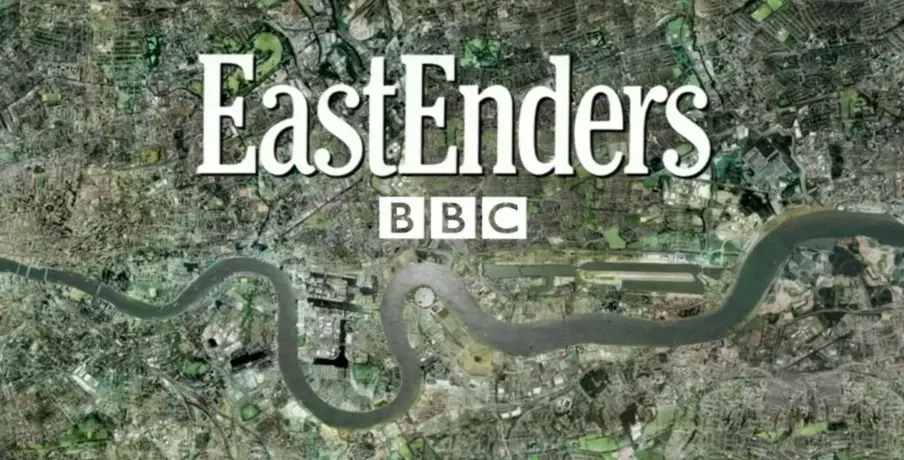
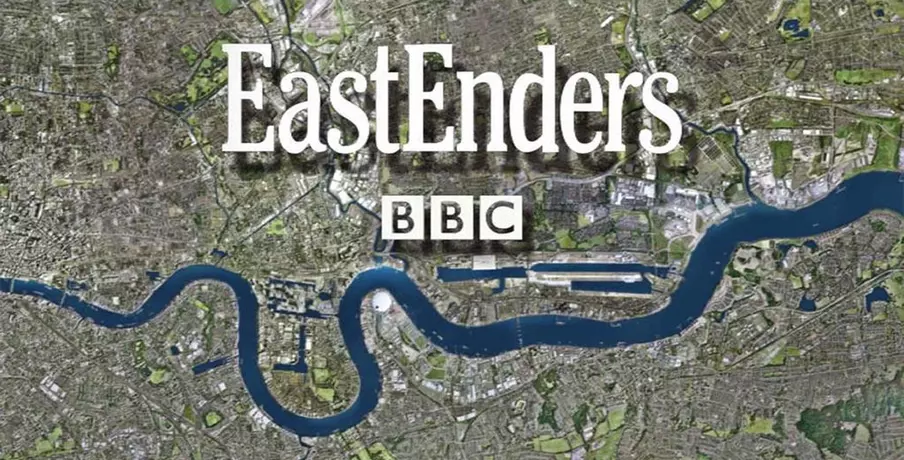
After being declared biologically dead in 1957, the Thames had previously been depicted in a muddy green on the opening title of cockney-soap TV show Eastenders – after our efforts to depict better health of the river it was refreshed to a flourishing blue in 2009.
Slow Horses (Apple TV+, 2022-present)
Jackson Lamb and Diana Taverner are far from friends. They are, at best, two people who occasionally need each other and hate themselves for it. And the place they conduct their tense, brilliantly-written exchanges in the Apple TV+ spy thriller? A bench overlooking Regent's Canal - right at the stretch of water that leads you to our main entrance.
It's a real bench. Totally worth a sit – you’ll find it just on the corner where the canal goes under the bridge, adjacent to the boat restaurant, painted red, directly opposite.
The show, starring Gary Oldman and Kristin Scott-Thomas and based on Mick Herron's acclaimed Slough House novels, fictionally places MI5 headquarters in Regent's Park - practically on our doorstep. London Zoo itself appears in the story too, referred to as "Regent's Park Zoo".


Back to Black (2024)
Amy Winehouse was a Camden girl through and through - and London Zoo was right on her doorstep. So when she and Blake Fielder-Civil went on their first date, they came to us. And when director Sam Taylor-Johnson set about recreating that moment for the 2024 biopic, she brought Marisa Abela and Jack O'Connell back to do the same.
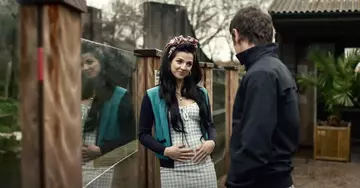
It's a small but significant scene - two people at the start of something that would shape one of the most celebrated albums of the 21st century. Back to Black went to extraordinary lengths to film in the real locations of Winehouse's life, from Ronnie Scott's to Camden Town, and London Zoo was no different.
Two hundred years in, and we're still making history - on screen, on the page, and in the wild.
If these stories have shown us anything, it's that London Zoo has always been more than a zoo. It's a place that inspires people - filmmakers, authors, musicians, artists - to tell stories that stay with you. We’ve helped artists and creators do this hundreds of times over twenty decades, we hope you’ve enjoyed reading about a few of our favourites.
And if you've got a story to tell, we'd love to hear from you. London Zoo and Whipsnade Zoo are both available for commercial filming, offering everything from Victorian architecture to living, breathing wildlife across two unique sites. Whether you need a backdrop, a star, or something in between - you know where to find us.
Explore commercial filming opportunities
We inspire, inform, and empower people to protect and restore wildlife. And as you can see, from time to time - turns out a camera helps.